When integrating HubSpot with a data platform on AWS, a common architectural decision appears quickly: Should updates to HubSpot be executed from AWS Lambda or AWS Glue?
The correct choice depends on workload characteristics, latency requirements, and system design principles.
This article explains the decision from an architectural and data engineering perspective.
The Nature of the HubSpot API
HubSpot is a transactional HTTP API system. Updates are performed via REST endpoints such as:
- Single record update (PATCH)
- Batch update
- Object APIs (contacts, companies, deals, custom objects)
HubSpot APIs are subject to rate limits and are optimized for application-layer interactions, not heavy ETL engines.
When to Use Lambda
Use AWS Lambda when:
- Updating a small number of HubSpot records
- Running near real-time synchronization
- Triggering updates from events (new payment, new user, status change)
- Calling HubSpot API with retries and rate limit handling
- Running scheduled sync jobs that are API-heavy but not compute-heavy
Typical architecture:
System Event → EventBridge / SQS → Lambda → HubSpot APIThis architecture is resilient, scalable, and cost-efficient.
When to Use Glue
Use AWS Glue when:
- Processing large datasets
- Cleaning and transforming data
- Matching records (deduplication, identity resolution)
- Preparing a curated dataset before sending updates
- Running ETL pipelines
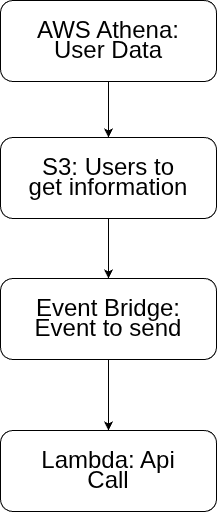
In this scenario, Glue should not call HubSpot directly. Instead:
Glue → Cleaned dataset in S3 → SQS/EventBridge → Lambda → HubSpotGlue performs data engineering.
Lambda performs API integration.
This separation follows good data architecture practices: ETL layer ≠ Application layer.
Why this works well
- Glue handles heavy data processing.
- Lambda handles API calls, retries, and rate limits.
- SQS decouples systems and prevents API overload.
- The system becomes observable and fault-tolerant.
- Use Glue for data processing
- Use Lambda for API communication
This separation aligns with modern data platform architecture and event-driven integration patterns.
Conclusion
From an architectural standpoint, HubSpot updates belong to the application/integration layer, not the ETL layer. Therefore, in most scenarios, AWS Lambda is the correct tool for updating HubSpot records, while AWS Glue should be used only for upstream data preparation.
This distinction becomes critical as systems scale and is a common design pattern in modern data platforms.